Showing posts with label Today in History. Show all posts

Wednesday, April 6, 2011

TODAY IN HISTORY: Kurt Cobain Commits Suicide (1994)

 Kurt Cobain

Modern rock icon Kurt Cobain commits suicide on this day in 1994. His body was discovered inside his home in Seattle, Washington, three days later by Gary Smith, an electrician, who was installing a security system in the suburban house. Despite indications that Cobain, the lead singer of Nirvana, killed himself, several skeptics questioned the circumstances of his death and pinned responsibility on his wife, Courtney Love.
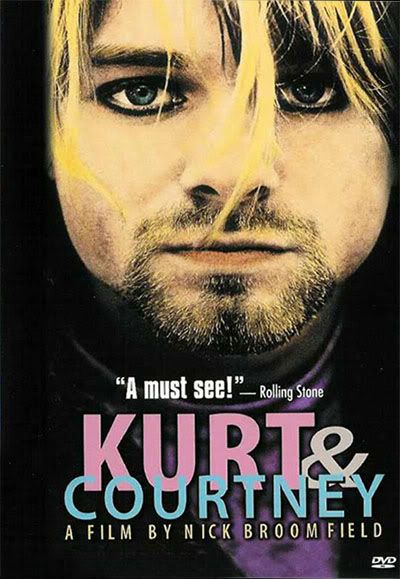
 Kurt & Courtney

At least two books, including one penned by Love's estranged father, and a nationally released documentary, Kurt & Courtney, openly expressed doubt that Cobain killed himself and all but accused Love of having her husband killed. Her volatile reputation and healthy list of enemies helped to circulate the rumors. However, police have concluded that Cobain's death was the result of suicide.
Cobain's downward spiral began taking shape in Italy the previous month. He went into a coma and nearly died after mixing champagne and the drug Rohypnol. The public was led to believe that the coma was induced by an accidental heroin overdose, since Cobain had a well-known problem with the drug.
 Courtney Love

Back at home in Seattle, the police were called to Cobain and Love's home when he again threatened to kill himself. Although Cobain stated in a 1991 interview that he didn't believe in guns, the officers confiscated four from his possession. As his wife and friends watched him spin out of control, they attempted to intervene. Cobain mostly ignored their concerns but reluctantly checked into a rehabilitation clinic in Los Angeles at the end of March.
On March 30, Cobain walked away from the clinic without informing his family or friends. For the next few days, Love could not locate him and decided to hire a private detective on April 3. The detective made contact with Cobain the following day in Seattle, but Cobain refused to return to Los Angeles.
In the meantime, Cobain had convinced a friend to buy him a gun, claiming he needed it for protection. On April 5, Cobain returned home. He had ingested enough Valium and heroin to reach near-fatal levels. In the apartment above the garage was Cobain's sloppily written suicide note, quoting Neil Young's lyric that it is "better to burn out than to fade away."

Thursday, March 3, 2011

TODAY IN HISTORY: Sheena Easton Made Music History (1985)

The controversial Prince-penned song "Sugar Walls" reaches #9 on Billboard magazine's R&B Singles chart on March 2, 1985, and makes Sheena Easton the first and still only recording artist to score top-10 singles on all five major Billboard singles charts: Pop, Country, Dance, Adult Contemporary and R&B.

To be fair, this same feat might have been achieved by Elvis Presley had the Dance chart existed during his heyday. But that is not to take anything away from Easton, who in her journey from the sweet and innocent "Morning Train (9 to 5)" to the salacious "Sugar Walls" accomplished a degree of crossover success that even such notorious musical shape-shifters as Madonna, Cher and Olivia Newton-John never matched. And it is also fair to point out Elvis Presley never matched Sheena Easton's additional feat of squeezing in a Grammy for Best Mexican-American Performance (for 1985's "Me Gustas Tal Como Eres"). For the record, the hits that helped Sheena Easton achieve her five-way Billboard record were, in order of release: the aforementioned 1981 Pop and Adult Contemporary hit "Morning Train (9 to 5)"; the 1983 Dance hit "Telefone (Long Distance Love Affair)"; the 1983 Country hit "We've Got Tonight" (a duet with Kenny Rogers); and the infamous 1985 R&B hit "Sugar Walls."
"Sugar Walls" also appeared on a very different chart in 1985: The so-called "Filthy 15" chart of the most objectionably dirty popular songs in existence, as chosen by Tipper Gore and her Parents Music Resource Council. The PMRC found the song's unsubtle metaphors objectionable enough to give "Sugar Walls" the #2 spot on the Filthy 15, second only to Prince's even less subtle "Darling Nikki." In the eyes of the diverse fellow-musicians who heaped their scorn upon the PMRC (e.g., Frank Zappa, Dee Snider, Ice-T, Metallica, Sonic Youth), it is quite possible that this accomplishment earned Sheena Easton even more musical street cred than the chart record she set on this day in 1985.

Wednesday, February 16, 2011

TODAY IN HISTORY: The Discovery Of King Tut's Tomb (1923) - Days That Shook The World

On this day in 1923, in Thebes, Egypt, English archaeologist Howard Carter enters the sealed burial chamber of the ancient Egyptian ruler King Tutankhamen.
 Howard Carter
Because the ancient Egyptians saw their pharaohs as gods, they carefully preserved their bodies after death, burying them in elaborate tombs containing rich treasures to accompany the rulers into the afterlife. In the 19th century, archeologists from all over the world flocked to Egypt, where they uncovered a number of these tombs. Many had long ago been broken into by robbers and stripped of their riches.
When Carter arrived in Egypt in 1891, he became convinced there was at least one undiscovered tomb--that of the little known Tutankhamen, or King Tut, who lived around 1400 B.C. and died when he was still a teenager. Backed by a rich Brit, Lord Carnarvon, Carter searched for five years without success. In early 1922, Lord Carnarvon wanted to call off the search, but Carter convinced him to hold on one more year.
In November 1922, the wait paid off, when Carter's team found steps hidden in the debris near the entrance of another tomb. The steps led to an ancient sealed doorway bearing the name Tutankhamen. When Carter and Lord Carnarvon entered the tomb's interior chambers on November 26, they were thrilled to find it virtually intact, with its treasures untouched after more than 3,000 years. The men began exploring the four rooms of the tomb, and on February 16, 1923, under the watchful eyes of a number of important officials, Carter opened the door to the last chamber.
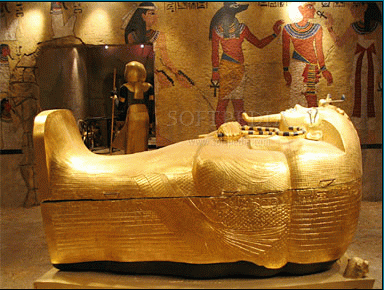
 Inside lay a sarcophagus with three coffins nested inside one another. The last coffin, made of solid gold, contained the mummified body of King Tut. Among the riches found in the tomb--golden shrines, jewelry, statues, a chariot, weapons, clothing--the perfectly preserved mummy was the most valuable, as it was the first one ever to be discovered. Despite rumors that a curse would befall anyone who disturbed the tomb, its treasures were carefully catalogued, removed and included in a famous traveling exhibition called the "Treasures of Tutankhamen." The exhibition's permanent home is the Egyptian Museum in Cairo. 

Tuesday, February 15, 2011

TODAY IN HISTORY: St. Valentine's Day Massacre (1929)

Four men dressed as police officers enter gangster Bugs Moran's headquarters on North Clark Street in Chicago, line seven of Moran's henchmen against a wall, and shoot them to death. The St. Valentine's Day Massacre, as it is now called, was the culmination of a gang war between arch rivals Al Capone and Bugs Moran.
                                                                      Bugs Moran                                        
George "Bugs" Moran was a career criminal who ran the North Side gang in Chicago during the bootlegging era of the 1920s. He fought bitterly with "Scarface" Al Capone for control of smuggling and trafficking operations in the Windy City. Throughout the 1920s, both survived several attempted murders. On one notorious occasion, Moran and his associates drove six cars past a hotel in Cicero, Illionis, where Capone and his associates were having lunch and showered the building with more than 1,000 bullets.
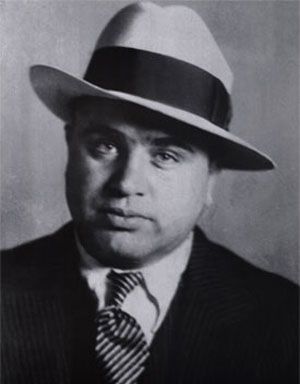
 Al Capone
A $50,000 bounty on Capone's head was the final straw for the gangster. He ordered that Moran's gang be destroyed. On February 14, a delivery of bootleg whiskey was expected at Moran's headquarters. But Moran was late and happened to see police officers entering his establishment. Moran waited outside, thinking that his gunmen inside were being arrested in a raid. However, the disguised assassins were actually killing the seven men inside.
The murdered men included Moran's best killers, Frank and Pete Gusenberg. Reportedly Frank was still alive when real officers appeared on the scene. When asked who had shot him, the mortally wounded Gusenberg kept his code of silence, responding, "No one, nobody shot me."
The St. Valentine's Day Massacre actually proved to be the last confrontation for both Capone and Moran. Capone was jailed in 1931 and Moran lost so many important men that he could no longer control his territory. On the seventh anniversary of the massacre, Jack McGurn, one of the Valentine's Day hit men, was killed him in a crowded bowling alley with a burst of machine-gun fire.
McGurn's killer remains unidentified, but was likely Moran, though he was never charged with the murder. Moran was relegated to small-time robberies until he was sent to jail in 1946. He died in Leavenworth Federal Prison in 1957 of lung cancer.

Sunday, February 13, 2011

TODAY IN HISTORY: Galileo Trial - DAYS THAT SHOOK THE WORLD

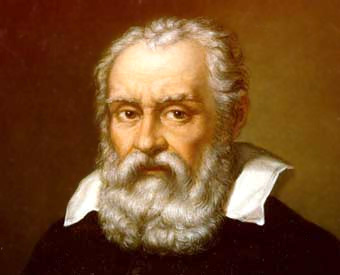
On this day in 1633, Italian philosopher, astronomer and mathematician Galileo Galilei arrives in Rome to face charges of heresy for advocating Copernican theory, which holds that the Earth revolves around the Sun. Galileo officially faced the Roman Inquisition in April of that same year and agreed to plead guilty in exchange for a lighter sentence. Put under house arrest indefinitely by Pope Urban VIII, Galileo spent the rest of his days at his villa in Arcetri, near Florence, before dying on January 8, 1642.
 Galileo, the son of a musician, was born February 15, 1564, in Pisa, Italy. He entered the University of Pisa planning to study medicine, but shifted his focus to philosophy and mathematics. In 1589, he became a professor at Pisa for several years, during which time he demonstrated that the speed of a falling object is not proportional to its weight, as Aristotle had believed. According to some reports, Galileo conducted his research by dropping objects of different weights from the Leaning Tower of Pisa. From 1592 to 1630, Galileo was a math professor at the University of Padua, where he developed a telescope that enabled him to observe lunar mountains and craters, the four largest satellites of Jupiter and the phases of Jupiter. He also discovered that the Milky Way was made up of stars. Following the publication of his research in 1610, Galileo gained acclaim and was appointed court mathematician at Florence.
Galileo's research led him to become an advocate of the work of the Polish astronomer Nicolaus Copernicus (1473-1573). However, the Copernican theory of a sun-centered solar system conflicted with the teachings of the powerful Roman Catholic Church, which essentially ruled Italy at the time. Church teachings contended that Earth, not the sun, was at the center of the universe. In 1633, Galileo was brought before the Roman Inquisition, a judicial system established by the papacy in 1542 to regulate church doctrine. This included the banning of books that conflicted with church teachings. The Roman Inquisition had its roots in the Inquisition of the Middle Ages, the purpose of which was to seek out and prosecute heretics, considered enemies of the state.

Today, Galileo is recognized for making important contributions to the study of motion and astronomy. His work influenced later scientists such as the English mathematician and physicist Sir Isaac Newton, who developed the law of universal gravitation. In 1992, the Vatican formally acknowledged its mistake in condemning Galileo.

Saturday, February 12, 2011

TODAY IN HISTORY: The Release Of Nelson Mandela (1990) - Days That Shook The World

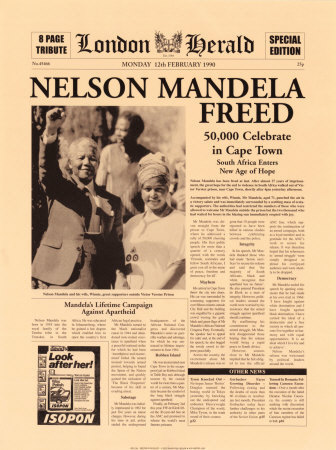
Nelson Mandela, leader of the movement to end South African apartheid, is released from prison after 27 years on February 11, 1990.

In 1944, Mandela, a lawyer, joined the African National Congress (ANC), the oldest black political organization in South Africa, where he became a leader of Johannesburg's youth wing of the ANC. In 1952, he became deputy national president of the ANC, advocating nonviolent resistance to apartheid--South Africa's institutionalized system of white supremacy and racial segregation. However, after the massacre of peaceful black demonstrators at Sharpeville in 1960, Nelson helped organize a paramilitary branch of the ANC to engage in guerrilla warfare against the white minority government.
In 1961, he was arrested for treason, and although acquitted he was arrested again in 1962 for illegally leaving the country. Convicted and sentenced to five years at Robben Island Prison, he was put on trial again in 1964 on charges of sabotage. In June 1964, he was convicted along with several other ANC leaders and sentenced to life in prison.
Mandela spent the first 18 of his 27 years in jail at the brutal Robben Island Prison. Confined to a small cell without a bed or plumbing, he was forced to do hard labor in a quarry. He could write and receive a letter once every six months, and once a year he was allowed to meet with a visitor for 30 minutes. However, Mandela's resolve remained unbroken, and while remaining the symbolic leader of the anti-apartheid movement, he led a movement of civil disobedience at the prison that coerced South African officials into drastically improving conditions on Robben Island. He was later moved to another location, where he lived under house arrest.

In 1989, F.W. de Klerk became South African president and set about dismantling apartheid. De Klerk lifted the ban on the ANC, suspended executions, and in February 1990 ordered the release of Nelson Mandela.
Mandela subsequently led the ANC in its negotiations with the minority government for an end to apartheid and the establishment of a multiracial government. In 1993, Mandela and de Klerk were jointly awarded the Nobel Peace Prize. One year later, the ANC won an electoral majority in the country's first free elections, and Mandela was elected South Africa's president.

Tuesday, February 8, 2011

TODAY IN HISTORY: The Great Baltimore Fire (1904)

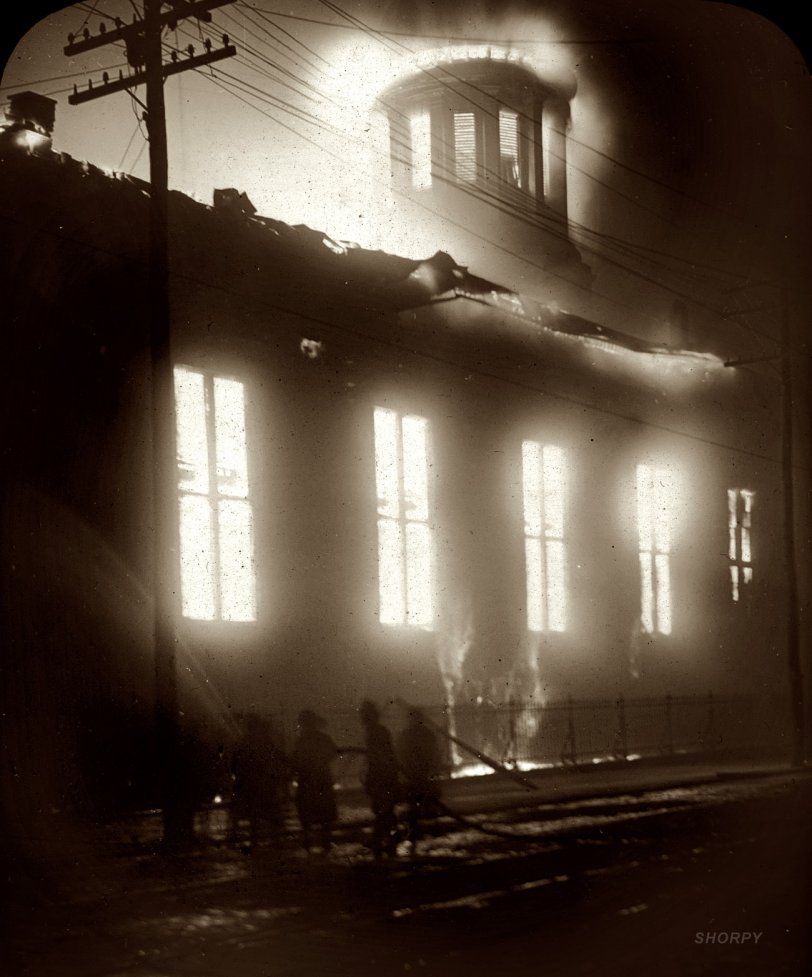
In Baltimore, Maryland, a small fire in the business district is wind-whipped into an uncontrollable conflagration that engulfs a large portion of the city by evening. The fire is believed to have been started by a discarded cigarette in the basement of the Hurst Building. When the blaze finally burned down after 31 hours, an 80-block area of the downtown area, stretching from the waterfront to Mount Vernon on Charles Street, had been destroyed. More than 1,500 buildings were completely leveled, and some 1,000 severely damaged, bringing property loss from the disaster to an estimated $100 million. Miraculously, no homes or lives were lost, and Baltimore's domed City Hall, built in 1867, was preserved.


The Great Baltimore Fire was the most destructive fire in the United States since the Great Chicago Fire of 1871 destroyed most of the city and caused an estimated $200 million in property damage.

Monday, February 7, 2011

TODAY IN HISTORY: Mary Kay Letourneau Was Released (1998) - A WEIRD LOVE STORY

A judge reinstates the suspended sentence of school teacher Mary Kay Letourneau and sends her back to prison for seven years after she is caught violating a no-contact order with her former student Vili Fualaau, when she is found in a vehicle with the boy. Letourneau first met Fualaau when she was a teacher at Shorewood Elementary School, in the Seattle suburb of Burien, Washington, and he was a second-grader. During the summer of 1996, Letourneau, then 34 and a married mother of four, began a sexual relationship with her former sixth-grade student, then 12.

The relationship was eventually discovered and in February 1997, Letourneau was arrested for rape. In May of that year, the former teacher, who was born Mary Katherine Schmitz in California in 1962, gave birth to the couple’s first child, a daughter named Audrey. That August, Letourneau pled guilty to two counts of second-degree child rape. Judge Linda Lau of King County Superior Court showed Letourneau leniency by suspending her 89-month sentence and the former school teacher was ordered to serve six months in jail, attend a treatment program and have no contact with Fualaau. Her case sparked a tabloid frenzy as well as a national debate over whether female sex offenders are treated differently than men who commit similar crimes.
On February 3, 1998, after being released from jail, Letourneau was discovered in a parked car with Fualaau and arrested for violating the conditions of her suspended sentence. Investigators found a large amount of cash in the vehicle, along with a passport and some baby clothes, indicating the couple might have been planning to flee the area with their young daughter. Three days later, on February 6, Judge Lau reinstated Letourneau’s original sentence and sent her back to prison. In October of that year, Letourneau gave birth to her second child with Fualaau, a daughter named Audrey. The children were raised by Fualaau’s mother while Letourneau remained in prison. Fualaau and his mother, Soona, later sued the Highline School District and city of Des Moines, Washington, for over $2 million, claiming police and school officials didn’t do enough to protect Vili. In May 2002, a jury ruled the Fualaaus were not entitled to any money.

In August 2004, Letourneau was released from prison after serving seven-and-a-half years. A judge also lifted a ban prohibiting her from contacting Fualaau, by then an adult. On May 20, 2005, Letourneau, then 43, and Fualaau, then 22, wed in a ceremony with tight security at a winery in Woodinville, Washington. The couple’s two daughters served as flower girls and Letourneau’s daughter from her first marriage, which lasted from 1984 to 1999, was the maid of honor. The television show Entertainment Tonight negotiated exclusive rights to film the ceremony.

Friday, February 4, 2011

TODAY IN HISTORY: Karen Carpenter Dies

Karen Carpenter, a singer who long suffered under the burden of the expectations that came with pop stardom, died on this day in 1983, succumbing to heart failure brought on by her long, unpublicized struggle with anorexia.

Carpenter had a fixation with her weight from her earliest days performing with her brother, Richard, in and around their hometown of Downey, California. As a teenager, she dropped at least 25 pounds on a popular and severe weight-loss program known as "the Water Diet," so that by the time she and Richard burst on the pop scene with their smash hit "Close To You" in the summer of 1970, she was a thin but healthy 20-year-old carrying 120 lbs. on a 5' 5"  frame. She maintained that weight through the early years of the Carpenters' success, yet it appears that Karen's insecurities about her appearance only grew, even as she was becoming one of the biggest pop stars of her era.

In pictures printed in Rolling Stone magazine in late 1974, when the Carpenters were one of the most successful acts in all of pop music, Karen looks fit and healthy. Yet by mid-1975, the Carpenters were forced to cancel tours of Japan and Europe after Karen collapsed on stage in Las Vegas. Her weight had plummeted to only 90 lbs., and though it would rebound somewhat after a brief hospitalization, the next seven years were a repeating cycle of dramatic weight loss, collapse and then hospitalization. The name of Karen's condition was virtually unknown to the public at this time, but all that was about to change. Early on the morning of February 4, 1983, while staying in her parents home in Downey, Karen suffered a deadly heart attack, brought on by the physiological stresses placed on her system by the disease whose name soon entered the public consciousness: anorexia nervosa. She was only 32 years old.

Wednesday, February 2, 2011

TODAY IN HISTORY: First Oxford Dictionary Published


On this day in 1884, the first portion, or fascicle, of the Oxford English Dictionary (OED), considered the most comprehensive and accurate dictionary of the English language, is published. Today, the OED is the definitive authority on the meaning, pronunciation and history of over half a million words, past and present
Plans for the dictionary began in 1857 when members of London's Philological Society, who believed there were no up-to-date, error-free English dictionaries available, decided to produce one that would cover all vocabulary from the Anglo-Saxon period (1150 A.D.) to the present. Conceived of as a four-volume, 6,400-page work, it was estimated the project would take 10 years to finish. In fact, it took over 40 years until the 125th and final fascicle was published in April 1928 and the full dictionary was complete--at over 400,000 words and phrases in 10 volumes--and published under the title A New English Dictionary on Historical Principles.
Unlike most English dictionaries, which only list present-day common meanings, the OED provides a detailed chronological history for every word and phrase, citing quotations from a wide range of sources, including classic literature and cookbooks. The OED is famous for its lengthy cross-references and etymologies. The verb "set" merits the OED's longest entry, at approximately 60,000 words and detailing over 430 uses.
No sooner was the OED finished than editors began updating it. A supplement, containing new entries and revisions, was published in 1933 and the original dictionary was reprinted in 12 volumes and officially renamed the Oxford English Dictionary.
Between 1972 and 1986, an updated 4-volume supplement was published, with new terms from the continually evolving English language plus more words and phrases from North America, Australia, the Caribbean, New Zealand, South Africa and South Asia.
In 1984, Oxford University Press embarked on a five-year, multi-million-dollar project to create an electronic version of the dictionary. The effort required 120 people just to type the pages from the print edition and 50 proofreaders to check their work. In 1992, a CD-ROM version of the dictionary was released, making it much easier to search and retrieve information.
Today, the dictionary's second edition is available online to subscribers and is updated quarterly with over 1,000 new entries and revisions. At a whopping 20 volumes weighing over 137 pounds, it would reportedly take one person 120 years to type all 59 million words in the OED.

TODAY IN HISTORY: Columbia MIssion Ends In Disaster


On this day in 2003, the space shuttle Columbia breaks up while entering the atmosphere over Texas, killing all seven crew members on board.
The Columbia's 28th space mission, designated STS-107, was originally scheduled to launch on January 11, 2001, but was delayed numerous times for a variety of reasons over nearly two years. Columbia finally launched on January 16, 2003, with a crew of seven. Eighty seconds into the launch, a piece of foam insulation broke off from the shuttle's propellant tank and hit the edge of the shuttle's left wing.
Cameras focused on the launch sequence revealed the foam collision but engineers could not pinpoint the location and extent of the damage. Although similar incidents had occurred on three prior shuttle launches without causing critical damage, some engineers at the space agency believed that the damage to the wing could cause a catastrophic failure. Their concerns were not addressed in the two weeks that Columbia spent in orbit because NASA management believed that even if major damage had been caused, there was little that could be done to remedy the situation.

Columbia reentered the earth's atmosphere on the morning of February 1. It wasn't until 10 minutes later, at 8:53 a.m.--as the shuttle was 231,000 feet above the California coastline traveling at 23 times the speed of sound--that the first indications of trouble began. Because the heat-resistant tiles covering the left wing's leading edge had been damaged or were missing, wind and heat entered the wing and blew it apart.
The first debris began falling to the ground in west Texas near Lubbock at 8:58 a.m. One minute later, the last communication from the crew was heard, and at 9 a.m. the shuttle disintegrated over southeast Texas, near Dallas. Residents in the area heard a loud boom and saw streaks of smoke in the sky. Debris and the remains of the crew were found in more than 2,000 locations across East Texas, Arkansas and Louisiana. Making the tragedy even worse, two pilots aboard a search helicopter were killed in a crash while looking for debris. Strangely, worms that the crew had used in a study that were stored in a canister aboard the Columbia did survive.
In August 2003, an investigation board issued a report that revealed that it in fact would have been possible either for the Columbia crew to repair the damage to the wing or for the crew to be rescued from the shuttle. The Columbia could have stayed in orbit until February 15 and the already planned launch of the shuttle Atlantis could have been moved up as early as February 10, leaving a short window for repairing the wing or getting the crew off of the Columbia.
In the aftermath of the Columbia disaster, the space shuttle program was grounded until July 16, 2005, when the space shuttle Discovery was put into orbit.

Tuesday, February 1, 2011

TODAY IN HISTORY: Guy Fawkes Death (1606)


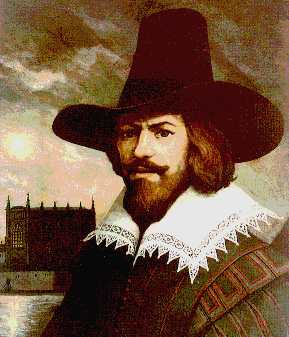
At Westminster in London, Guy Fawkes, a chief conspirator in the plot to blow up the British Parliament building, jumps to his death moments before his execution for treason.
On the eve of a general parliamentary session scheduled for November 5, 1605, Sir Thomas Knyvet, a justice of the peace, found Guy Fawkes lurking in a cellar of the Parliament building. Fawkes was detained and the premises thoroughly searched. Nearly two tons of gunpowder were found hidden within the cellar. In his interrogation, Fawkes revealed that he was a participant in an English Catholic conspiracy organized by Robert Catesby to annihilate England's entire Protestant government, including King James I. The king was to have attended Parliament on November 5.
Over the next few months, English authorities killed or captured all of the conspirators in the "Gunpowder Plot" but also arrested, tortured, or killed dozens of innocent English Catholics. After a brief trial, Guy Fawkes was sentenced, along with the other surviving chief conspirators, to be hanged, drawn, and quartered in London. On January 30, 1606, the gruesome public executions began in London, and on January 31 Fawkes was called to meet his fate. While climbing to the hanging platform, however, he jumped from the ladder and broke his neck, dying instantly.
In remembrance of the Gunpowder Plot, Guy Fawkes Day is celebrated across Great Britain every year on the fifth of November. As dusk falls in the evening, villagers and city dwellers across Britain light bonfires, set off fireworks, and burn an effigy of Guy Fawkes, celebrating his failure to blow up Parliament and James I.
At Westminster in London, Guy Fawkes, a chief conspirator in the plot to blow up the British Parliament building, jumps to his death moments before his execution for treason.
On the eve of a general parliamentary session scheduled for November 5, 1605, Sir Thomas Knyvet, a justice of the peace, found Guy Fawkes lurking in a cellar of the Parliament building. Fawkes was detained and the premises thoroughly searched. Nearly two tons of gunpowder were found hidden within the cellar. In his interrogation, Fawkes revealed that he was a participant in an English Catholic conspiracy organized by Robert Catesby to annihilate England's entire Protestant government, including King James I. The king was to have attended Parliament on November 5.
Over the next few months, English authorities killed or captured all of the conspirators in the "Gunpowder Plot" but also arrested, tortured, or killed dozens of innocent English Catholics. After a brief trial, Guy Fawkes was sentenced, along with the other surviving chief conspirators, to be hanged, drawn, and quartered in London. On January 30, 1606, the gruesome public executions began in London, and on January 31 Fawkes was called to meet his fate. While climbing to the hanging platform, however, he jumped from the ladder and broke his neck, dying instantly.
In remembrance of the Gunpowder Plot, Guy Fawkes Day is celebrated across Great Britain every year on the fifth of November. As dusk falls in the evening, villagers and city dwellers across Britain light bonfires, set off fireworks, and burn an effigy of Guy Fawkes, celebrating his failure to blow up Parliament and James I.

Monday, January 31, 2011

TODAY IN HISTORY: Assasination Of Gandhi (1948)

o
Mohandas Karamchand Gandhi, the political and spiritual leader of the Indian independence movement, is assassinated in New Delhi by a Hindu fanatic.
Born the son of an Indian official in 1869, Gandhi's Vaishnava mother was deeply religious and early on exposed her son to Jainism, a morally rigorous Indian religion that advocated nonviolence. Gandhi was an unremarkable student but in 1888 was given an opportunity to study law in England. In 1891, he returned to India, but failing to find regular legal work he accepted in 1893 a one-year contract in South Africa.
Settling in Natal, he was subjected to racism and South African laws that restricted the rights of Indian laborers. Gandhi later recalled one such incident, in which he was removed from a first-class railway compartment and thrown off a train, as his moment of truth. From thereon, he decided to fight injustice and defend his rights as an Indian and a man. When his contract expired, he spontaneously decided to remain in South Africa and launched a campaign against legislation that would deprive Indians of the right to vote. He formed the Natal Indian Congress and drew international attention to the plight of Indians in South Africa. In 1906, the Transvaal government sought to further restrict the rights of Indians, and Gandhi organized his first campaign of satyagraha, or mass civil disobedience. After seven years of protest, he negotiated a compromise agreement with the South African government.

In 1914, Gandhi returned to India and lived a life of abstinence and spirituality on the periphery of Indian politics. He supported Britain in the First World War but in 1919 launched a new satyagraha in protest of Britain's mandatory military draft of Indians. Hundreds of thousands answered his call to protest, and by 1920 he was leader of the Indian movement for independence. He reorganized the Indian National Congress as a political force and launched a massive boycott of British goods, services, and institutions in India. Then, in 1922, he abruptly called off the satyagraha when violence erupted. One month later, he was arrested by the British authorities for sedition, found guilty, and imprisoned.
After his release in 1924, he led an extended fast in protest of Hindu-Muslim violence. In 1928, he returned to national politics when he demanded dominion status for India and in 1930 launched a mass protest against the British salt tax, which hurt India's poor. In his most famous campaign of civil disobedience, Gandhi and his followers marched to the Arabian Sea, where they made their own salt by evaporating sea water. The march, which resulted in the arrest of Gandhi and 60,000 others, earned new international respect and support for the leader and his movement.
In 1931, Gandhi was released to attend the Round Table Conference on India in London as the sole representative of the Indian National Congress. The meeting was a great disappointment, and after his return to India he was again imprisoned. While in jail, he led another fast in protest of the British government's treatment of the "untouchables"--the impoverished and degraded Indians who occupied the lowest tiers of the caste system. In 1934, he left the Indian Congress Party to work for the economic development of India's many poor. His protege, Jawaharlal Nehru, was named leader of the party in his place.
With the outbreak of World War II, Gandhi returned to politics and called for Indian cooperation with the British war effort in exchange for independence. Britain refused and sought to divide India by supporting conservative Hindu and Muslim groups. In response, Gandhi launched the "Quit India" movement it 1942, which called for a total British withdrawal. Gandhi and other nationalist leaders were imprisoned until 1944.
In 1945, a new government came to power in Britain, and negotiations for India's independence began. Gandhi sought a unified India, but the Muslim League, which had grown in influence during the war, disagreed. After protracted talks, Britain agreed to create the two new independent states of India and Pakistan on August 15, 1947. Gandhi was greatly distressed by the partition, and bloody violence soon broke out between Hindus and Muslims in India.
In an effort to end India's religious strife, he resorted to fasts and visits to the troubled areas. He was on one such vigil in New Delhi when Nathuram Godse, a Hindu extremist who objected to Gandhi's tolerance for the Muslims, fatally shot him. Known as Mahatma, or "the great soul," during his lifetime, Gandhi's persuasive methods of civil disobedience influenced leaders of civil rights movements around the world, especially Martin Luther King Jr. in the United States.

Tuesday, January 25, 2011

TODAY IN HISTOR: Sir Winston Churchill Die (1965)


Sir Winston Leonard Spencer Churchill, the British leader who guided Great Britain and the Allies through the crisis of World War II, dies in London at the age of 90.
Born at Blenheim Palace in 1874, Churchill joined the British Fourth Hussars upon his father's death in 1895. During the next five years, he enjoyed an illustrious military career, serving in India, the Sudan, and South Africa, and distinguishing himself several times in battle. In 1899, he resigned his commission to concentrate on his literary and political career and in 1900 was elected to Parliament as a Conservative MP from Oldham. In 1904, he joined the Liberals, serving in a number of important posts before being appointed Britain's first lord of the admiralty in 1911, where he worked to bring the British navy to a readiness for the war that he foresaw.
In 1915, in the second year of World War I, Churchill was held responsible for the disastrous Dardanelles and Gallipoli campaigns, and he was excluded from the war coalition government. He resigned and volunteered to command an infantry battalion in France. However, in 1917, he returned to politics as a cabinet member in the Liberal government of Lloyd George. From 1919 to 1921, he was secretary of state for war and in 1924 returned to the Conservative Party, where two years later he played a leading role in the defeat of the General Strike of 1926. Out of office from 1929 to 1939, Churchill issued unheeded warnings of the threat of Nazi and Japanese aggression.

After the outbreak of World War II in Europe, Churchill was called back to his post as first lord of the admiralty and eight months later replaced the ineffectual Neville Chamberlain as prime minister of a new coalition government. In the first year of his administration, Britain stood alone against Nazi Germany, but Churchill promised his country and the world that the British people would "never surrender." He rallied the British people to a resolute resistance and expertly orchestrated Franklin D. Roosevelt and Joseph Stalin into an alliance that crushed the Axis.
In July 1945, 10 weeks after Germany's defeat, his Conservative government suffered a defeat against Clement Attlee's Labour Party, and Churchill resigned as prime minister. He became leader of the opposition and in 1951 was again elected prime minister. Two years later, he was awarded the Nobel Prize in Literature for his six-volume historical study of World War II and for his political speeches; he was also knighted by Queen Elizabeth II. In 1955, he retired as prime minister but remained in Parliament until 1964, the year before his death.

Monday, January 24, 2011

TODAY IN HISTORY: First Frisbee Was Released

On this day in 1957, machines at the Wham-O toy company roll out the first batch of their aerodynamic plastic discs--now known to millions of fans all over the world as Frisbees.
The story of the Frisbee began in Bridgeport, Connecticut, where William Frisbie opened the Frisbie Pie Company in 1871. Students from nearby universities would throw the empty pie tins to each other, yelling "Frisbie!" as they let go. In 1948, Walter Frederick Morrison and his partner Warren Franscioni invented a plastic version of the disc called the "Flying Saucer" that could fly further and more accurately than the tin pie plates. After splitting with Franscioni, Morrison made an improved model in 1955 and sold it to the new toy company Wham-O as the "Pluto Platter"--an attempt to cash in on the public craze over space and Unidentified Flying Objects (UFOs).
In 1958, a year after the toy's first release, Wham-O--the company behind such top-sellers as the Hula-Hoop, the Super Ball and the Water Wiggle--changed its name to the Frisbee disc, misspelling the name of the historic pie company. A company designer, Ed Headrick, patented the design for the modern Frisbee in December 1967, adding a band of raised ridges on the disc's surface--called the Rings--to stabilize flight. By aggressively marketing Frisbee-playing as a new sport, Wham-O sold over 100 million units of its famous toy by 1977.
High school students in Maplewood, New Jersey, invented Ultimate Frisbee, a cross between football, soccer and basketball, in 1967. In the 1970s, Headrick himself invented Frisbee Golf, in which discs are tossed into metal baskets; there are now hundreds of courses in the U.S., with millions of devotees. There is also Freestyle Frisbee, with choreographed routines set to music and multiple discs in play, and various Frisbee competitions for both humans and dogs--the best natural Frisbee players.
Today, at least 60 manufacturers produce the flying discs--generally made out of plastic and measuring roughly 20-25 centimeters (8-10 inches) in diameter with a curved lip. The official Frisbee is owned by Mattel Toy Manufacturers, who bought the toy from Wham-O in 1994.

TODAY IN HISTORY: Killer Quake in China

On this day in 1556, an earthquake in Shaanxi, China, kills an estimated 830,000 people. Counting casualties is often imprecise after large-scale disasters, especially prior to the 20th century, but this disaster is still considered the deadliest of all time.
The quake struck in late evening, with aftershocks continuing through the following morning. Later scientific investigation revealed that the magnitude of the quake was approximately 8.0 to 8.3, which isn't close to the strongest tremor on record. However, the quake struck in the middle of a densely populated area with poorly constructed buildings and homes, resulting in a horrific death toll.
The epicenter of the earthquake was in the Wei River Valley in the Shaanxi Province, near the cities of Huaxian, Weinan and Huayin. In Huaxian, every single building and home collapsed, killing more than half the residents of the city, a number estimated in the tens of thousands. It was a similar story in Weinan and Huayin. In some places, 60-foot-deep crevices opened in the earth. Serious destruction and death occurred as much as 300 miles away from the epicenter. The earthquake also triggered landslides, which contributed to the massive death toll.
Even if the number of deaths caused by the Shaanxi earthquake has been overestimated slightly, it would still rank as the worst disaster in history by a considerable margin. The earthquake and tsunami in Indonesia in 2004 is generally considered the second deadliest disaster in history.

Sunday, January 23, 2011

TODAY IN HISTORY: Foreman Defeated Frazier (1973)

 On January 1973, in Kingston, Jamaica, the 24-year-old George Foreman pulls off a stunning upset, defeating reigning champion Joe Frazier in four minutes and 35 seconds to win the heavyweight championship of the world.

At 6’3" and 217 1/2 pounds, four inches taller and 3 1/2 pounds heavier than Frazier, "Big George" was the 1968 Olympic gold medalist and had won his last 37 fights, 34 of them by knockout. The boxing world, however, sniffed that he hadn’t truly faced anyone like "Smokin’ Joe," and Frazier--the 1964 Olympic winner and unbeaten heavyweight world champion since 1968, including a 1971 victory over the great Muhammad Ali--was put at a 3-1 favorite before the match in Jamaica.
Billed as the "Sundown Showdown," the bout was supposed to be one more triumphant step for Frazier on his way to a multimillion-dollar rematch with Ali. It was Foreman, however, who roared out in front from the beginning. Using his greater size to advantage, Foreman slammed Frazier with uppercuts, knocking him down six times in two rounds, as the crowd went wild in Kingston’s National Stadium. Foreman’s last punch, a perfect right uppercut, lifted Frazier’s stocky body into the air for an instant before he hit the canvas yet again. Frazier struggled to his feet, but at that point, 1:35 into the second round, the referee Arthur Mercante called an end to the bout, declaring Foreman the winner on a technical knock-out (TKO).
The Frazier-Foreman fight in January 1973 was the first boxing match broadcast on the Home Box Office (HBO) cable television network. The celebrated announcer Howard Cosell called the match for TV, making one of sports history’s most memorable calls when he repeated "Down goes Frazier! Down goes Frazier!" It was Foreman, and not Frazier, who would take on Ali in that multimillion-dollar championship bout, held the following summer in Zaire (now the Congo) and dubbed the "Rumble in the Jungle." Ali won the match late in the eighth round, regaining the world heavyweight crown and handing Foreman the first loss of his professional career.

TODAY IN HISTORY: Heath Ledger Dies (2008)


On this day in 2008, Hollywood mourns a talented young actor’s life cut tragically short, after the body of 28-year-old Heath Ledger is found by his masseuse and housekeeper on the floor of his rented apartment in the SoHo neighborhood of New York City.

Best known for his Academy Award-nominated turn as the closeted gay cowboy Ennis Del Mar in the director Ang Lee’s acclaimed Brokeback Mountain (2005), Ledger was a former child actor from Australia who first became known to American audiences in the 1999 teen comedy 10 Things I Hate About You. He later passed up other teen comedies and was rewarded with a big break when he landed the role of Mel Gibson’s son in the Revolutionary War drama The Patriot (2000). After appearing in the well-reviewed Monster’s Ball (2001), Ledger starred in two critical and commercial flops, A Knight’s Tale (2001) and The Four Feathers (2002). He roared back in 2005, with lead roles in no fewer than four films, including Casanova, in which he played the title role.
It was Brokeback Mountain, however, that truly made Ledger a star and earned him comparisons to acting greats such as Marlon Brando. Ledger lost the Best Actor Oscar to Philip Seymour Hoffman (Capote) but Brokeback Mountain cemented his reputation as an A-list actor and a fixture in the pages of celebrity-obsessed magazines. This last role--which he fulfilled uneasily--was intensified by his relationship with the actress Michelle Williams, whom he met on the set of Brokeback Mountain. The couple had a daughter, Matilda, born in October 2005, and were often photographed in various scenes of domestic bliss. In September 2007, however, Ledger and Williams announced they were separating, and Ledger moved from their house in Brooklyn to the rented SoHo apartment.

 
Though his personal life might have been in turmoil, Ledger’s professional life was flourishing in the months before his death. Near the end of 2007, he was in London filming Terry Gilliam’s The Imaginarium of Doctor Parnassus. In addition to a role as one of several Bob Dylan alter egos in Todd Haynes’ I’m Not There, he had also recently finished work on The Dark Knight, the latest Batman film, in which Ledger played a younger version of the Joker, the villainous role originated by Jack Nicholson. In interviews that would be scrutinized exhaustively after his death, the actor admitted that the Joker role had been difficult for him and that he had been using prescription drugs to manage recurring bouts of stress and insomnia.
Soon after the masseuse and housekeeper discovered Ledger’s body, emergency crews arrived on the scene but were unable to revive him. Media speculation about his possible illegal drug use intensified over the next two weeks, until on February 8, the New York City Medical Examiner’s Office released the results of toxicology tests performed on Ledger’s body. The report stated that he died of an accidental “abuse of prescription medications” that included commonly known painkillers, anti-anxiety drugs and sleeping pills. After memorial services in New York and Los Angeles, Ledger’s family took his body back to their native Australia; he is buried next to his grandparents, in his hometown of Perth.

TODAY IN HISTORY: Bloody Sunday Massacre in Russia (1905)


On 1905, a group of workers led by the radical priest Georgy Apollonovich Gapon marched to the czar's Winter Palace in St. Petersburg to make their demands. Imperial forces opened fire on the demonstrators, killing and wounding hundreds. Strikes and riots broke out throughout the country in outraged response to the massacre, to which Nicholas responded by promising the formation of a series of representative assemblies, or Dumas, to work toward reform.
Internal tension in Russia continued to build over the next decade, however, as the regime proved unwilling to truly change its repressive ways and radical socialist groups, including Lenin's Bolsheviks, became stronger, drawing ever closer to their revolutionary goals. The situation would finally come to a head more than 10 years later as Russia's resources were stretched to the breaking point by the demands of World War I.